

AR-COATED WINDOWS for high-energy lasers
Maximum beam throughput and reflection suppression for high-energy laser systems.
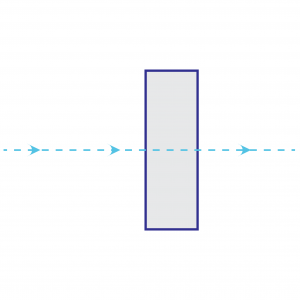
High-energy laser windows provide a significant barrier between distinct environments while ensuring minimal transmission loss. In high-intensity systems, standard windows can cause unwanted back-reflections that destabilise laser cavities or induce parasitic oscillations. Our anti-reflection (AR) coated windows are engineered to maximise throughput and minimise ghost reflections in the most demanding pulsed and ultrafast regimes.
High-energy anti-reflection coatings
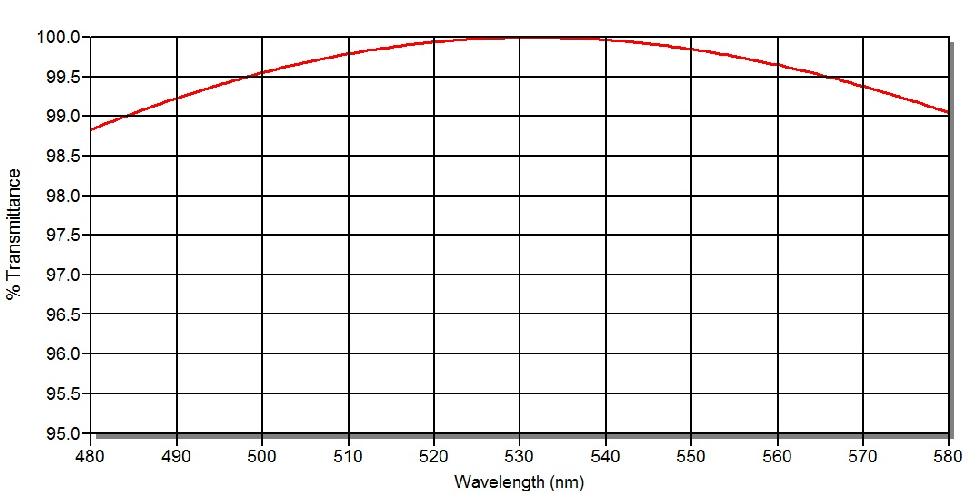
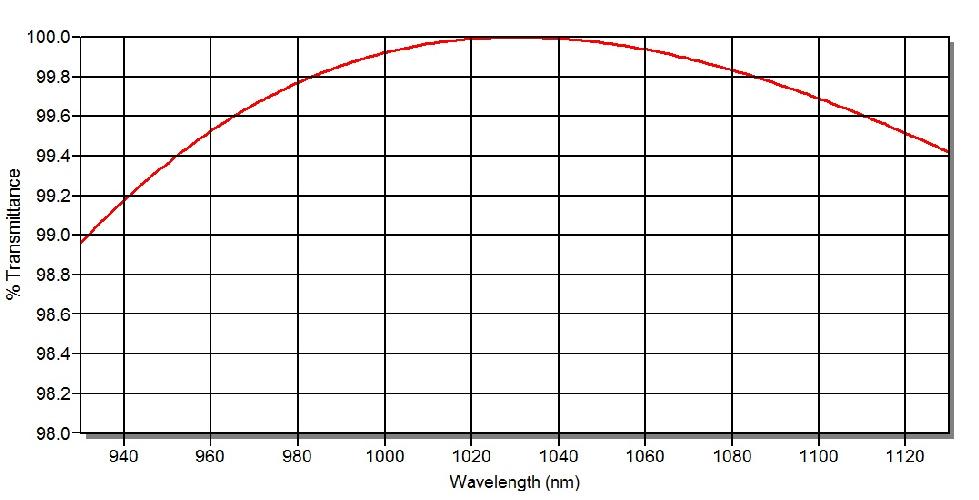
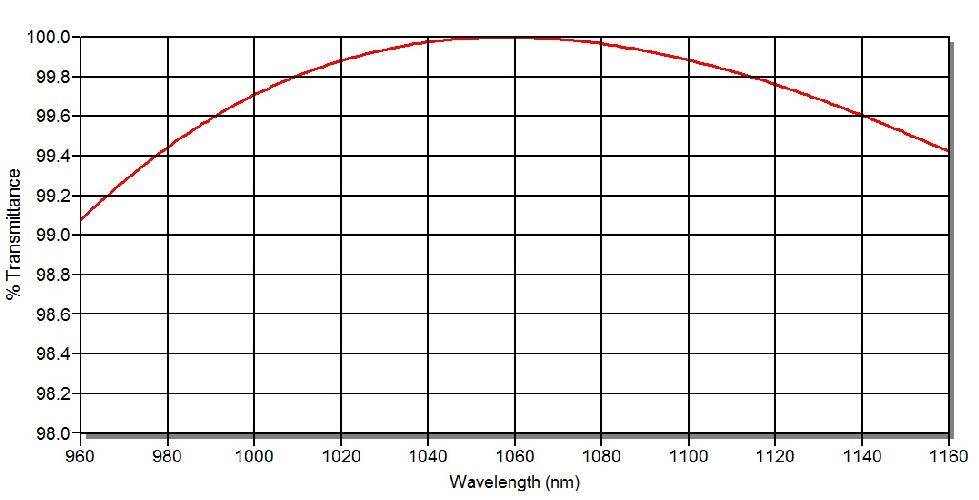
In high-energy applications, the primary concern is the laser-induced damage threshold (LIDT) and the suppression of parasitic reflections. A standard uncoated glass surface reflects approximately 4% of incident light. In a high-gain system this can lead to significant energy loss and potential component damage. Our IBS (ion beam sputtering) coatings reduce this reflectivity to R <0.1% at specific wavelengths, such as 1064nm or 532nm.
To ensure survival under intense peak power densities, we utilise electric field (E-field) optimisation. When light enters a multilayer coating, internal reflections create a standing wave with specific intensity peaks. Traditionally, these peaks can occur at the interfaces between different coating materials, which are the most vulnerable points for failure due to microscopic defects or mechanical stress. Our solution is to modify the coating design to shift these intensity peaks away from the interfaces and into the bulk of the most robust layers, such as SiO2. This results in superior optical durability since the part of the coating with the highest damage threshold is exposed to the highest intensity laser light.
Key CHAracteristics of our AR-coated windows
- Our optics are characterised by their optical quality. We utilise high-purity substrates, such as Suprasil 3001, to ensure negligible absorption and minimal wavefront distortion.
- Customisable designs for specific requirements. We offer a range of substrate materials and coating specifications to meet the needs of unique experimental laser systems.
- Superior surface finish. Every window is polished to a high degree of flatness and low scatter to ensure peak performance in precision laser systems.
- Substrate purity. For continuous wave (CW) or high-energy pulsed lasers, we specify IR-grade fused silica to ensure negligible hydroxyl (OH) content of <1ppm.
specifications
- Material: Low-OH fused silica, N-BK7, sapphire.
- Diameter: 10-100mm+.
- Diameter tolerance: +0/-0.25mm, thickness tolerance: +/-0.25mm, both sides 10-5 scratch and dig, better than 10 arc sec parallel.
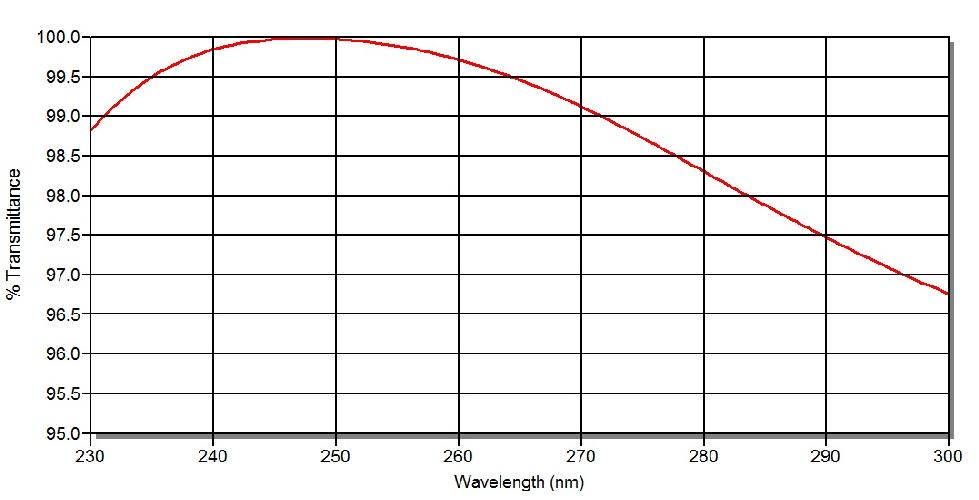
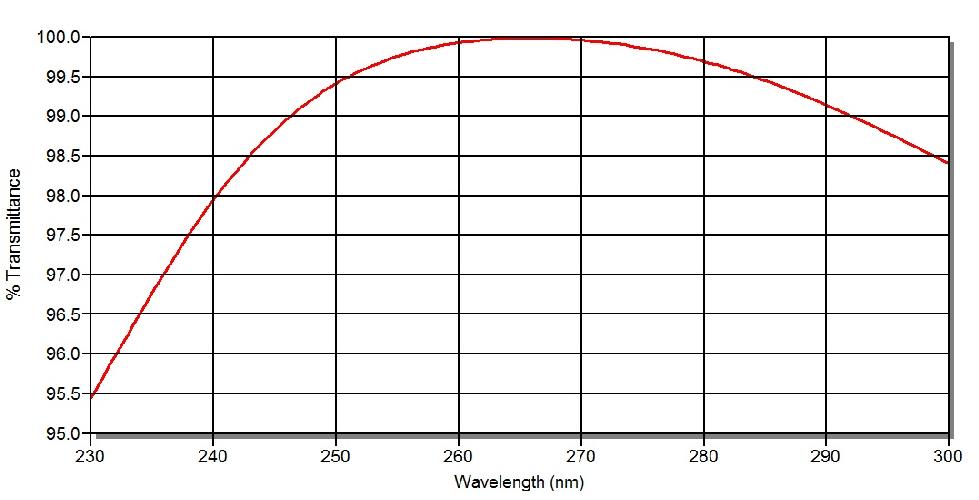
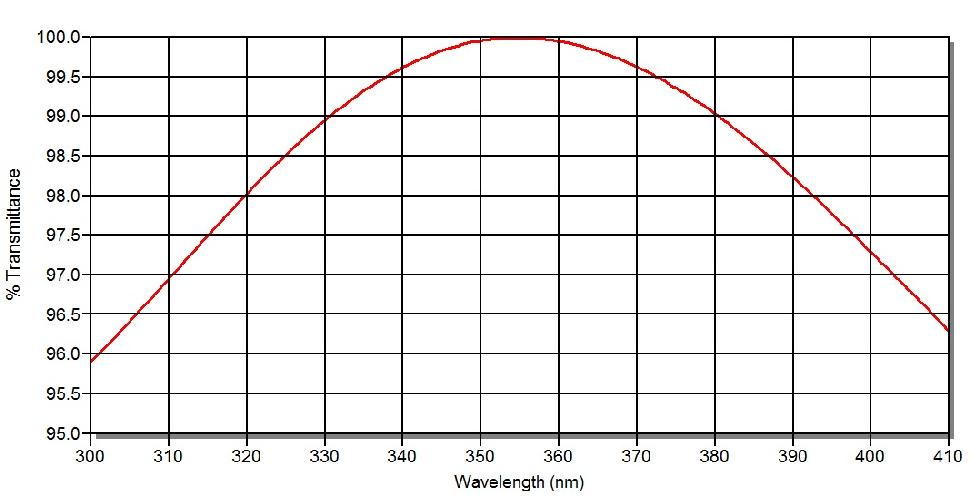
- All single wavelength AR coatings give <0.25%R for the respective wavelength.
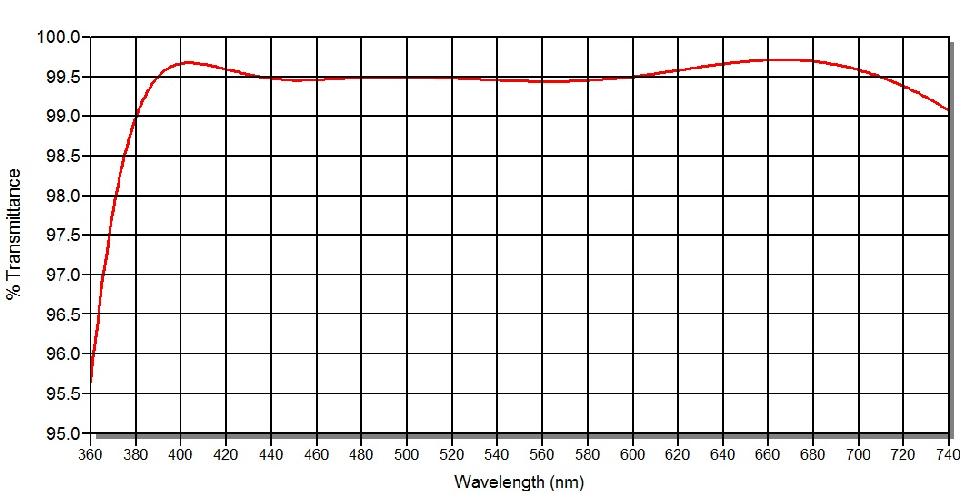
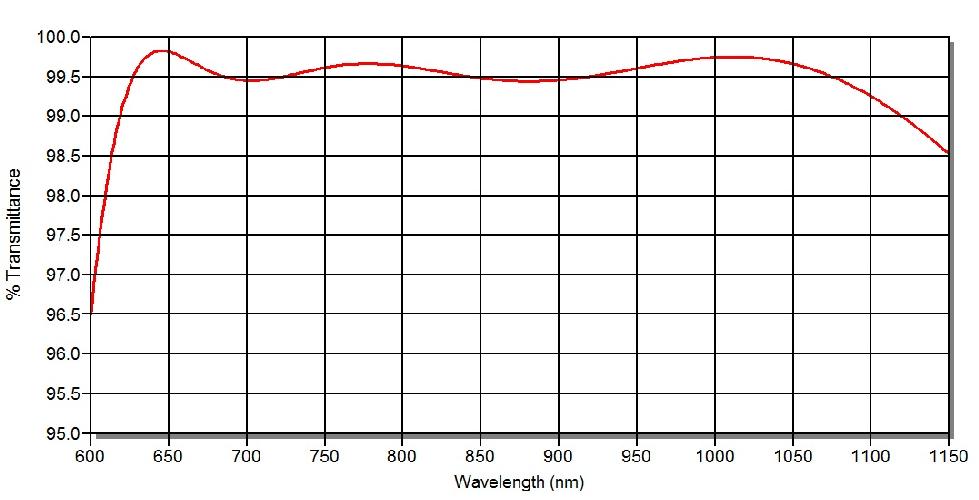
- The broadband AR coatings for 245nm-410nm give (<1%R avg.) while all other listed broadband AR coatings give (<0.5%R avg.).
- Coating technology: IBS (high-energy) or IAD (Industrial pulsed).
- Surface quality: 10-5 S-D.
- Transmitted wavefront: λ/10 or better.
- Anti-reflection coating: R <0.1% at design wavelength
Applications
- Laser cavity output couplers: Protecting the system from back-reflections while maintaining high-energy throughput.
- Lidar and remote sensing: Providing durable environmental seals for sensitive detector assemblies.
- Ultrafast frequency conversion: Minimising pulse broadening and maintaining beam quality in harmonic generation.
PART NUMBER |
DIAMETER (D) |
THICKNESS (T) |
COATING WAVELENGTH |
FS-FWD-25.4-6.35-AR/AR-248-0 |
25.4mm |
6.35mm |
248nm |
FS-FWD-25.4-6.35-AR/AR-266-0 |
25.4mm |
6.35mm |
266nm |
FS-FWD-25.4-6.35-AR/AR-355-0 |
25.4mm |
6.35mm |
355nm |
FS-FWD-25.4-6.35-AR/AR-532-0 |
25.4mm |
6.35mm |
532nm |
FS-FWD-50.8-9.52-AR/AR-532-0 |
50.8mm |
9.52mm |
532nm |
FS-FWD-25.4-6.35-AR/AR-1030-0 |
25.4mm |
6.35mm |
1030nm |
FS-FWD-50.8-9.52-AR/AR-1030-0 |
50.8mm |
9.52mm |
1030nm |
FS-FWD-25.4-6.35-AR/AR-1064-0 |
25.4mm |
6.35mm |
1064nm |
FS-FWD-50.8-9.52-AR/AR-1064-0 |
50.8mm |
9.52mm |
1064nm |
AR @ 248nm /0º
AR @ 266nm /0º
AR @ 355nm /0º
AR @ 532nm /0º
AR @ 1030nm /0º
AR @ 1064nm /0º
AR @ 245-440nm /0º

AR @ 400-700nm /0º
AR @ 630-1100nm /0º
Frequently Asked Questions
Q: Why is IBS preferred for high-energy windows?
A: Ion beam sputtering produces dense, amorphous films with near-zero absorption and superior adhesion. These characteristics are significant for windows exposed to high peak power pulses where traditional coatings might fail.
Q: Can you provide windows for dual wavelengths?
A: Yes. We design multi-band AR coatings for applications such as frequency doubling, where the window must maintain high transmission at both the fundamental and second harmonic wavelengths.
Q: How does substrate purity affect performance?
A: In high-energy systems, even trace impurities can lead to thermal lensing. Using low-OH materials ensures that the window does not absorb energy from the beam, preventing beam-pointing instability and wavefront distortion.