

UNCOATED OPTICAL SUBSTRATEs
Precision flat substrates for high-energy laser systems
Uncoated optical substrates form the foundation of many high-energy laser optics. Whether supplied as windows, mirrors, wedged components or reference flats, substrate quality directly influences coating durability, wavefront performance and long-term system reliability.
At Manx Precision Optics, we manufacture uncoated optical substrates using tightly controlled fabrication processes designed to minimise sub-surface damage and surface roughness. This is particularly important for high LIDT coatings, where underlying material integrity determines achievable damage thresholds and coating stability.
All substrates are processed, polished and inspected in-house at our Isle of Man facility. This ensures traceability, repeatability and consistent quality across prototype and OEM production volumes.
Key characteristics of our uncoated optical substrates
- Low sub-surface damage. Controlled grinding and polishing processes reduce micro-cracking and help mitigate coating-related laser induced damage.
- Low surface roughness. Precision finishing minimises scatter and absorption, supporting high transmission or reflection once coated.
- High surface flatness. Metrology-led polishing supports accurate beam propagation and minimal wavefront distortion.
- Defined surface quality. Scratch-dig specifications aligned to application and system requirements.
- Dimensional control. Thickness, parallelism and wedge manufactured to specified tolerances for reliable integration.
- Material options. Available in BK7 and fused silica for visible, infrared and ultraviolet laser applications.
- Prepared for high LIDT coatings. Substrates fabricated with coating compatibility in mind, enabling improved adhesion and achievable damage thresholds.
What we supply
We manufacture flat optical substrates for integration into high-energy laser systems and precision optical assemblies:
- Flat substrates including windows, mirror blanks and wedged optics.
- Reference flats for calibration, metrology and interferometric testing.
- Standard and custom geometries tailored to OEM and laboratory requirements.
Materials offered:
- BK7 optical glass.
- Fused silica.
Material selection depends on wavelength range, thermal loading and mechanical requirements.
BK7 substrates are widely used for visible and near infrared laser systems where good optical homogeneity and cost efficiency are required.
Fused silica substrates are typically selected for:
- Ultraviolet laser wavelengths.
- High peak power applications.
- Environments where low thermal expansion is critical.
Where required, we can advise on material suitability based on wavelength, fluence and environmental operating conditions.
While we supply a range of standard formats, most customer requirements involve defined flatness, scratch-dig, parallelism or wedge specifications. We welcome enquiries for non-standard dimensions and tolerances.
Substrate quality for high LIDT performance
In high-energy laser applications, coating performance is inseparable from substrate quality. Sub-surface damage, micro-cracks or excessive roughness can initiate laser induced damage or increase absorption under high fluence conditions.
For this reason, substrate preparation is treated as a performance-critical stage rather than a preliminary process. Control of grinding parameters, polishing chemistry and surface handling directly influences the stability and durability of subsequent coatings.
By managing these factors internally, we reduce variability between batches and support consistent optical behaviour in demanding laser systems.
Uncoated reference flats
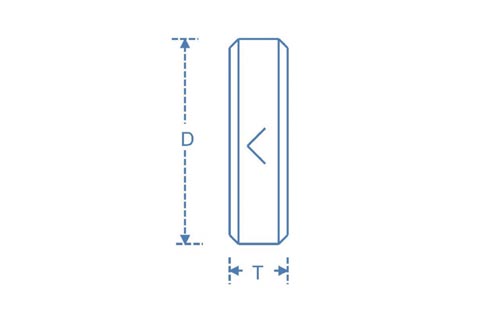
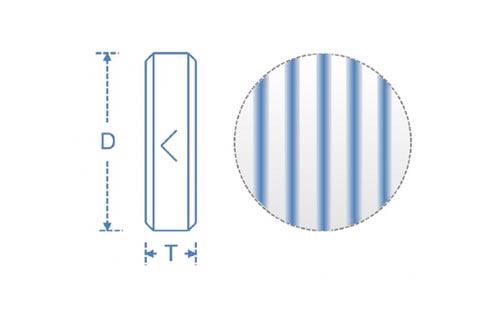
MPO optical reference flats are precision-engineered components designed for calibration, inspection and quality control environments.
Their flatness enables reliable use in:
- Interferometric testing.
- Surface form verification.
- Optical system alignment.
- Production quality control procedures.
- Reference flats are manufactured under the same controlled processes as our coated optics, ensuring consistency between metrology standards and production components.
- Custom sizes and flatness specifications are available on request.
Substrate fabrication and inspection
Uncoated optical substrates intended for high-energy laser use require controlled fabrication from initial shaping through to final polishing and inspection.
Our substrate preparation process includes:
- Controlled material preparation. Material handling designed to minimise internal stress and inclusions.
- Precision grinding and polishing. Processes optimised to reduce sub-surface damage prior to coating.
- Surface quality verification. Scratch-dig inspection aligned to specified tolerances.
- Flatness and parallelism measurement. Interferometric testing where required.
- Pre-coating cleanliness control. Surface preparation suitable for high LIDT coating deposition.
- By controlling these stages internally, we ensure substrates supplied either as standalone components or for subsequent coating meet defined optical and mechanical specifications.
Integration with coated optics
Many of our uncoated optical substrates are supplied for subsequent coating within MPO’s in-house high LIDT coating facility. Controlling both substrate preparation and coating deposition enables:
- Improved coating adhesion.
- Reduced scatter and absorption.
- Higher achievable laser induced damage thresholds.
- Consistent performance across production batches.
This integration supports customers developing high-energy laser optics for demanding OEM systems where repeatability and durability are critical.
The MPO Advantage
Our uncoated optical substrates are precision polished and inspected in-house, ensuring controlled surface quality, flatness and sub-surface integrity. This disciplined fabrication approach supports reliable integration into high-energy laser and OEM optical systems.
Discuss your substrate requirements
Whether you require standard flat substrates or fully specified custom components, we support projects from early design discussion through to volume production.
Our technical team works directly with optical engineers and procurement managers to ensure substrates meet defined performance, dimensional and integration requirements.
For further information or to discuss your application, please contact our team.
Frequently Asked Questions
Q: What roles do uncoated optical substrates play in high-energy laser systems?
A: Uncoated optical substrates are typically supplied either for direct use in low-reflection or diagnostic applications, or as the base material for subsequent coating. In both cases, substrate quality influences wavefront stability, scatter and mechanical integration. Where coatings are applied, surface finish and sub-surface integrity affect achievable laser induced damage thresholds and long-term coating durability.
What is the difference between BK7 and fused silica substrates?
A: BK7 is commonly used for visible and near infrared systems where good optical homogeneity and cost efficiency are required. Fused silica is typically selected for ultraviolet wavelengths, high peak power applications and environments requiring low thermal expansion
Q: How does sub-surface damage affect laser performance?
A: Micro-cracks and polishing damage beneath the optical surface can act as initiation sites for laser induced damage. Controlling grinding and polishing parameters reduces this risk and improves coating reliability.
Q: Can uncoated substrates be supplied to custom flatness or scratch-dig specifications?
A: Yes, MPO can manufacture substrates to defined flatness, parallelism, wedge and scratch-dig tolerances to suit laboratory or OEM integration requirements.
Q: Are substrates prepared for high LIDT coating deposition?
A: Yes. Surface preparation and cleanliness control are managed to ensure compatibility with high LIDT coating processes and to support consistent coating adhesion and durability.
Q: When are uncoated substrates used instead of coated optics?
A: Uncoated substrates may be used in applications where reflection losses are acceptable, where coatings will be applied later in the supply chain, or where the component functions primarily as a mechanical or reference element such as a calibration flat.
Q: Why is sub-surface damage control important during substrate fabrication?
A: Grinding and polishing processes can introduce micro-cracks beneath the surface. Under high fluence conditions, these can act as initiation points for laser induced damage or contribute to increased absorption once coated. Controlled fabrication reduces this risk and supports consistent optical performance.